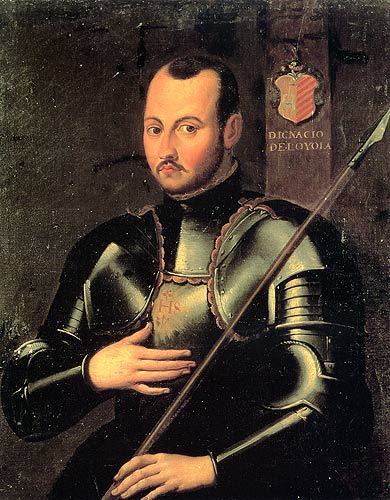
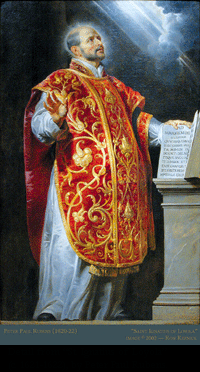
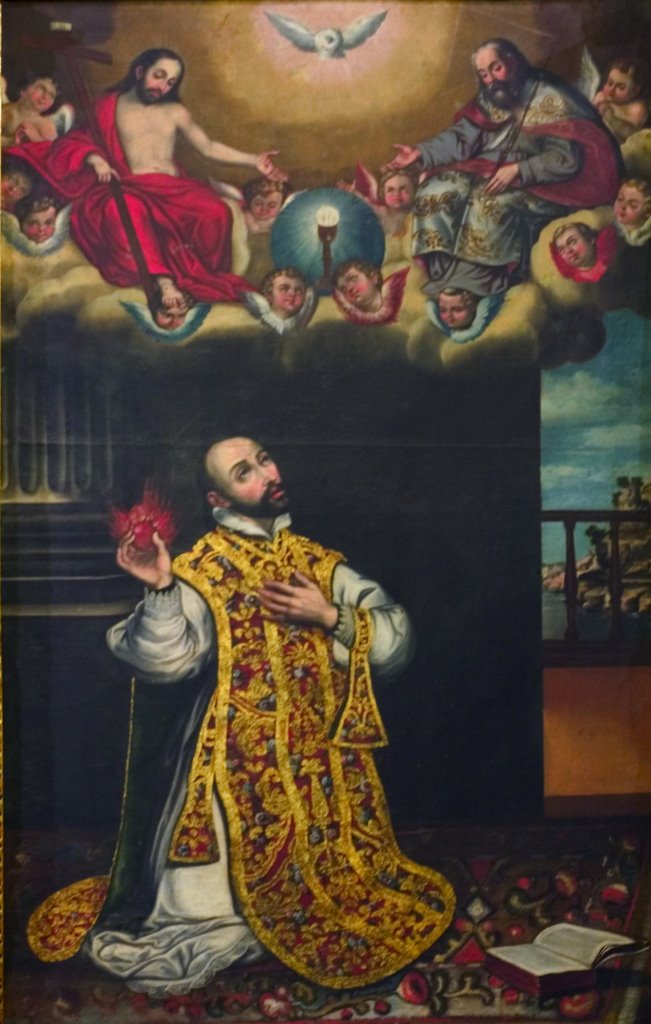
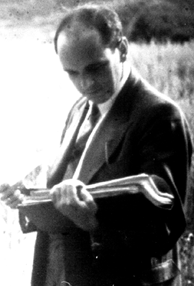
Happy St. Ignatius Day!
Monday, July 31, is the Memorial of St. Ignatius of Loyola and the 450th anniversary of St. Ignatius' death.
***
Here is a link to fifty letters written by Ignatius of Loyola to his brother Jesuits ... Selected Letters and Instructions of St. Ignatius of Loyola .... edited by Joseph N. Tylenda, S.J. from the Woodstock Theological Center ...
Much of Saint Ignatius Loyola's spiritual teaching is found in his letters, and these have always been regarded by Jesuits as an important source of their spirituality. Among Ignatius' many letters, those written to his fellow Jesuits have always had a special place, for in these the Jesuit of today not only finds Ignatius' teaching on the spiritual life, but he also meets Ignatius the man, expressing his affection for and interest in those to whom he wrote .... This present collection contains fifty letters and instructions written to Jesuits. ... each letter is preceded by a short introduction, identifying the letter's recipient and indicating or explaining the occasion for the letter. The letters are given in chronological order and cover the years from September 1541 to July 20, 1566, eleven days before Ignatius' death.
***

- view a document signed by Saint Ignatius in 1551 and later adorned with a fragment of bone from his skeleton. - Written Relics: Autographs from the Talbot Collection
***
Read about the Jesuit Jubilee Presentation at Creighton University.
***
Here is a link to fifty letters written by Ignatius of Loyola to his brother Jesuits ... Selected Letters and Instructions of St. Ignatius of Loyola .... edited by Joseph N. Tylenda, S.J. from the Woodstock Theological Center ...
Much of Saint Ignatius Loyola's spiritual teaching is found in his letters, and these have always been regarded by Jesuits as an important source of their spirituality. Among Ignatius' many letters, those written to his fellow Jesuits have always had a special place, for in these the Jesuit of today not only finds Ignatius' teaching on the spiritual life, but he also meets Ignatius the man, expressing his affection for and interest in those to whom he wrote .... This present collection contains fifty letters and instructions written to Jesuits. ... each letter is preceded by a short introduction, identifying the letter's recipient and indicating or explaining the occasion for the letter. The letters are given in chronological order and cover the years from September 1541 to July 20, 1566, eleven days before Ignatius' death.
***
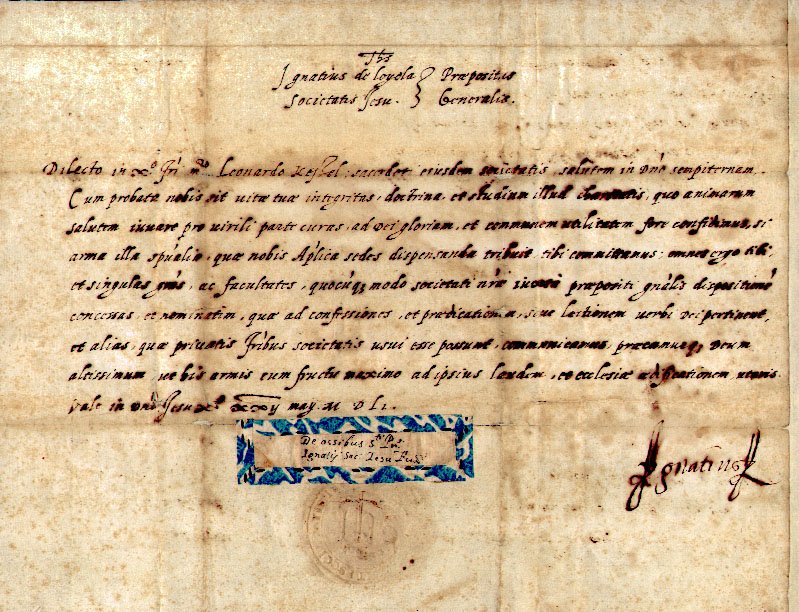
- view a document signed by Saint Ignatius in 1551 and later adorned with a fragment of bone from his skeleton. - Written Relics: Autographs from the Talbot Collection
***
Read about the Jesuit Jubilee Presentation at Creighton University.
posted by crystal | 8:03 PM
|
5 comments